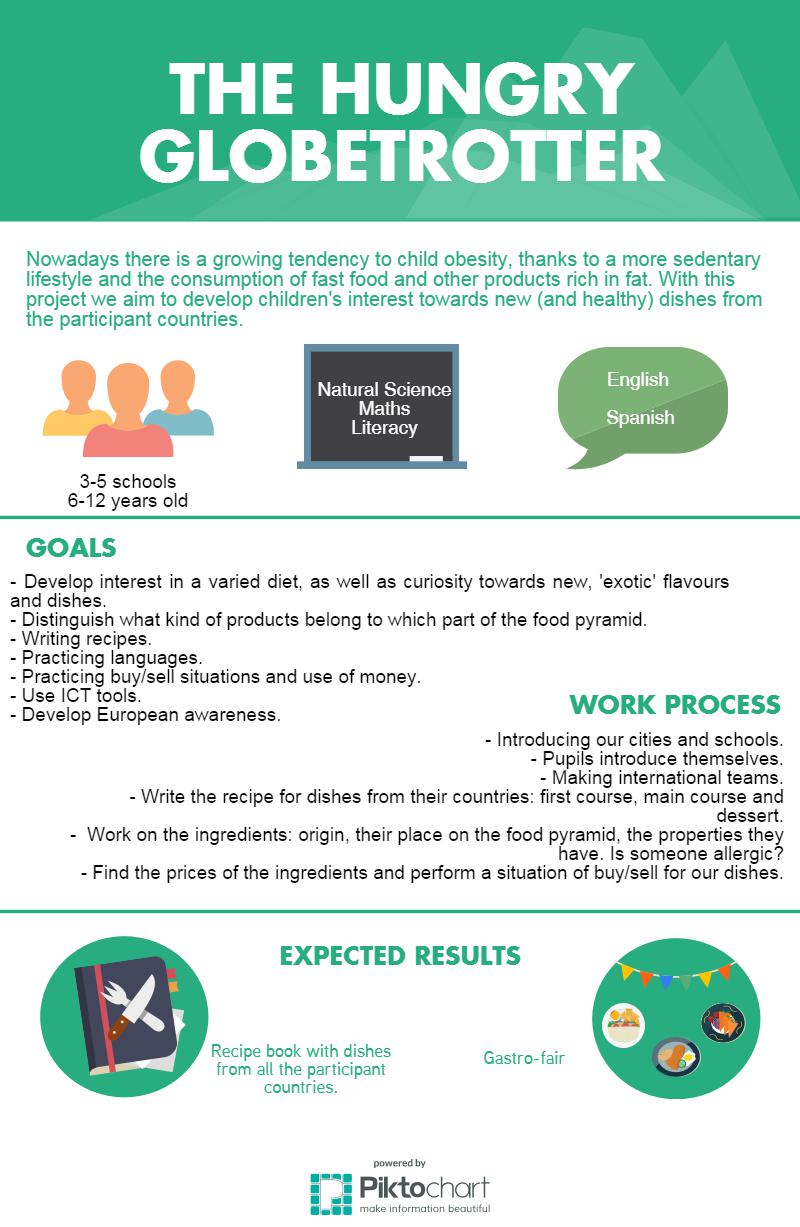
In unit 2 we were asked to reflect on those aspects of our teaching we need to improve and learn about. Afterwards, we had to search for some projects that could help with it. And well... I was overwhelmed with so many ideas!
First, about those things I need to improve I would say the feeling of being stuck. Sometimes I feel we have too many contents and/or too little time to teach, plus all the extra activities, and other events in the class (some problem happened that morning, children not understanding something and taking more time than expected, etc) put pressure on us, like we're on a hurry. In those moments, it's easy to feel overcome and feeling you lose control of your own work and tasks.
Another aspect I need to improve is the use of ICT tools more regularly, and relying on children to make an autonomous, good use of them. So far, when I include some technology in the class, it's still me using the keyboard and mouse, leading all the task and giving children a very little responsability.

About the lack of autonomy, perhaps it's because the age of my group of children (6-7 years old). I know they are digital natives and their knowledge (from playing games and videos on the computer, tablet or smartphone at home) and intuition will make up for the lack of practice of this or that concrete application I want to use in class. But at the same time, they're children and I don't want them to accidentally drop the tablet or find some problem with the settings. To avoid this, so far, we've used only one tablet per team.
I should also be more regular and include some time for ICT activities along the week, either in Maths lessons, Literacy, Social Science... It's also a bit related to the paragraph above: it's already May and we still need to teach quite a few contents, complete the books, evaluations... So, I need to take a breath, think of this as one more part of the curriculum and make a plan.
Apart from all that, we need to develop and evaluate competencies, however I (we?) still spend quite a lot of time on mechanical tasks and tests to practice and repeat contents, but not applying them on a real situation of childrens' lives.
What did I learn from the projects?
I browsed the
SNA website and read about a few projects whose titles caught my attention. It was like opening a chest full of creativity and bright ideas. I suppose with all these new treasures and the feedback from the MOOC participants I realized we all have similar doubts, but we do also have the enthusiasm and the will to learn more and improve so...
...What to do when I feel stuck?
Relax and take a deep breath. You've been through this before. Keep calm and make your plan considering less is more: hurry will make us chaotic and us, teachers can't afford that. Quality before quantity. Checking projects from other teachers will also provide some ideas about activities to make our lessons more effective.
...What ICT tools can I use and when?
So far, Plickers got a great success and children even ask for it, but it's not one tool in which children have a main role using ICT devices. I have to return to my idea at the beginning of the school year to use Padlet: every child can write a post with their answer to an open question. About the 'when', the last period of the day is a bit more complicated. Children are more tired and sometimes even start to bother other students, so it might be a good moment to use such motivating tools and activities.
These are my
top apps for the class.
In case we can participante on a eTwinning project, the TwinSpace offers tools for communication among teachers and students too.
...How can I work on and evaluate competencies?
Projects are competencial tasks by defnition. Every teacher can create their own project, adapted to the characteristics of their own group, school and city, so the curriculum will be perfectly integrated and the project will be related and adapted to students' real life situations. We can even give children the chance to try actions and experiences they wouldn't normally do... but will surely enjoy, like for example, interviewing someone, participating on a radio program, etc.
Of course I need to use books and do some mechanical tasks in order to practice contents... but children will learn a lot more with activities that develop their competences, like projects. These will also stimulate their motivation and enthusiasm, which is exactly what neuroscience states: we learn what excites us.
Possibly, I could pass children a test after the project, to check what they've learnt, but that wouldn't evaluate competencies unless I suggested similar situations to those studied along the project. Plickers, Quizziz or Kahoot could lend a hand too. But it would be easier to use rubrics, learning diaries, self-assessment and peer assessment to evaluate students' competencies along the project.